How to Sell a GIA Certified Diamond in the UK?

How To Sell A GIA Certified Diamond In The UK?

By: John

You don’t really realise how personal selling a diamond feels until the moment you decide to let it go.
At first, most people assume it’s just a matter of finding a buyer and agreeing on a number. But when you decide to sell certified diamond jewellery, especially something GIA certified, the process becomes strangely personal. A little emotional too, sometimes. You’re not just selling a stone. You’re selling the memory attached to it, the occasion, the reason it existed in your life in the first place.
And honestly, that changes the experience.
Still, if you’re planning to sell GIA certified diamond jewellery in the UK, having that certificate already puts you ahead. Buyers trust it. Dealers recognise it immediately. Online platforms prioritise it. In a market where hesitation can ruin a sale, trust matters more than people realise.
Probably more than sparkle, if we’re being honest.

Does Certification Increase Diamond Value?

Yes, certification absolutely affects a diamond’s value, but not in a way people usually assume.
A certificate doesn’t magically make a diamond worth more on its own. What it really does is remove doubt. Buyers know what they’re looking at because the grading has already been independently verified. That confidence changes how quickly a stone sells and how serious buyers become during negotiations.
GIA certification especially carries weight in UK resale markets because it’s viewed as consistent and strict. Some labs are seen as softer with grading. GIA usually isn’t.
And buyers know that.
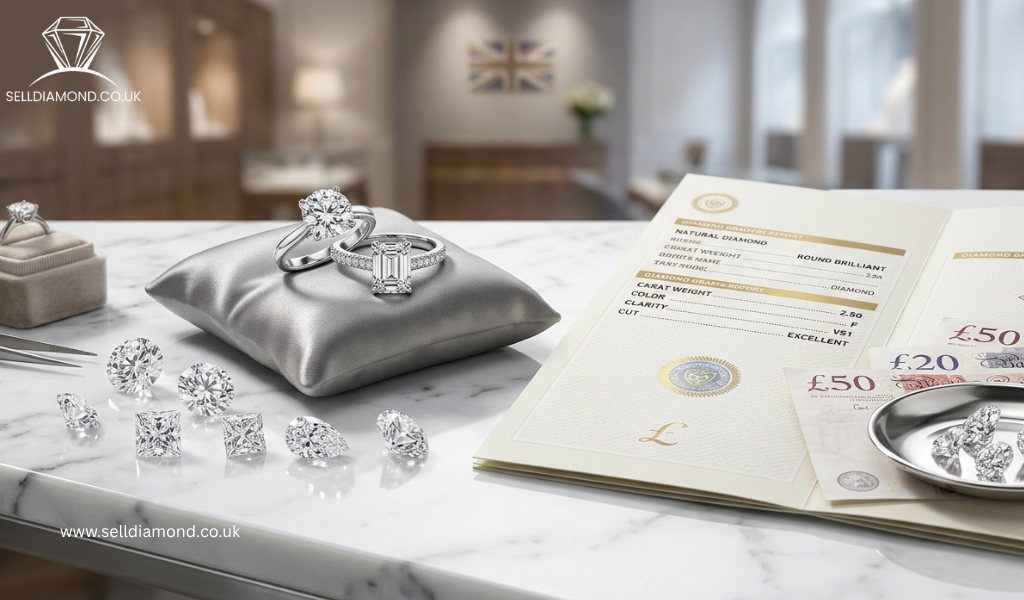
When someone wants to sell certified diamond jewellery, the certificate becomes proof that the colour, clarity, cut, and carat weight are legitimate. Without it, buyers start questioning everything. They lower offers to protect themselves. Sometimes significantly.
Things buyers usually check first include:
  • Carat weight
  • Cut quality
  • Clarity grade
  • Colour grade
  • Original GIA paperwork
  • Laser inscription details
I remember speaking with a jeweller once who said, “People don’t buy paperwork. They buy certainty.”
That’s probably the best explanation.
Especially online, where trust feels fragile.

Where Can I Sell a Certified Diamond in the UK?

You can Sell Certified Diamonds Online, through jewellery dealers, auction houses, or specialist diamond buyers across the UK. Each route works differently, though.
Online diamond buyers have become incredibly popular because the process is faster than it used to be. Usually you upload your GIA report details, send photos, receive an estimated valuation, then ship the piece securely for inspection. Some companies, including selldiamond.co.uk, also arrange insured collection services now.
Most people choose between:
  • Online specialist buyers
  • Auction houses
  • Independent diamond dealers
  • Private marketplace sales
And then there are auction houses.
These can work well for rare stones or branded jewellery, though the process often takes longer. Private sales exist too, but they come with more risk and uncertainty.
When choosing certified diamond buyers in UK markets, look carefully at reviews, transparency, and whether they explain pricing properly. A good buyer won’t rush you into accepting an offer within five minutes.

Do Buyers Prefer GIA Certified Diamonds?

Yes, most professional buyers strongly prefer GIA certified diamonds because the reports are globally recognised and trusted.
That preference becomes even more obvious during GIA diamond resale in UK markets, where buyers compare multiple stones daily. They need consistency. A recognised grading standard saves time and reduces arguments about quality.
And honestly, buyers are cautious now.
Too many people have heard stories about inflated valuations or overgraded stones. GIA reports help calm that suspicion. The grading feels reliable, which makes negotiation smoother for everyone involved.
Round brilliant diamonds with GIA certification usually attract the strongest interest, especially between one and two carats. Oval cuts remain popular too, though trends change constantly.
What buyers usually prefer includes:
  • Natural GIA certified diamonds
  • Round brilliant cuts
  • Near colourless grades
  • Strong cut quality
  • Minimal visible inclusions
  • Popular carat ranges
What surprises many sellers is how much cut quality matters compared to sheer size. A smaller well cut diamond often creates stronger buyer interest than a larger dull looking stone. You notice it immediately under natural light. Some diamonds seem alive. Others just… sit there.
Hard to explain until you see it yourself.

How Do I Verify My Diamond Certificate?

You can verify a GIA certificate by checking the report number directly through the GIA database and matching it to your stone’s details.
Most GIA certified diamonds also include laser inscriptions on the girdle, which is the outer edge of the diamond. Jewellers use magnification to confirm the inscription matches the report number.
Tiny detail. Huge difference.
Before you sell certified diamond jewellery, it’s worth checking that all paperwork is accurate and still readable. Creased certificates, missing reports, or mismatched information can slow the process down quickly.
And presentation matters more than people expect.
Clean the ring properly before valuations. Not obsessively, just enough to remove residue and fingerprints. Jewellery shop lighting exposes everything. Dust suddenly looks enormous under magnification.
A few things worth checking before meeting buyers:
  • Original GIA certificate
  • Matching report number
  • Diamond condition
  • Ring setting condition
  • Secure packaging for transport
  • Professional cleaning if needed
I once watched a buyer inspect a diamond silently for nearly two full minutes. Longest two minutes imaginable, honestly.
The seller looked like they were waiting for exam results.

Also Read: Where To Sell GIA Certified Diamonds Safely For Maximum Value?
 Sell GIA Certified Diamonds

How Quickly Can I Sell a Certified Diamond?

You can sometimes sell GIA certified diamond pieces within a day, though realistic timelines depend on the quality of the stone, pricing expectations, and where you choose to sell.
Online specialist buyers tend to move faster because they already understand the resale market. Auction houses move slower but can occasionally achieve stronger offers for unique pieces.
Private sales are unpredictable.
Sometimes they happen immediately. Sometimes listings sit untouched for weeks because buyers hesitate over trust, pricing, or authenticity. That’s the difficult part when trying to sell certified diamonds online independently. People ask endless questions.
Can they verify the certificate?
Has the diamond been treated?
Why are you selling it?
Fair questions, honestly.
The fastest sales usually happen when sellers understand current market conditions and price realistically. Retail purchase prices and resale prices are very different things. That part disappoints people sometimes, especially if they bought during emotionally significant moments.
Engagements. Anniversaries. Family gifts.
Diamonds carry stories whether we want them to or not.

Conclusion

Selling a diamond isn’t really just about selling a ‘Diamond’.
That sounds obvious, maybe. But once you actually begin the process, you realise how much emotion quietly sits underneath the practical side of it all. The valuation meetings, the certificate checks, the conversations about carat weight and clarity… they’re technical on the surface. Underneath, not always.
Still, if you want to sell GIA certified diamond jewellery in the UK, certification genuinely helps. Buyers trust it. Dealers respond faster to it. And the entire process feels smoother when the stone already comes with recognised grading.
That trust matters.
Especially now, when people question almost everything online.
Take your time comparing offers. Speak with multiple certified diamond buyers in UK markets. Understand that resale pricing works differently from retail pricing, even if the numbers feel frustrating at first. And if something feels rushed or unclear, step away for a bit. There’s no rule saying you have to decide immediately.
Some things just need a little breathing room.
Anyway… maybe that’s why people hold onto diamonds for so long before finally deciding to let them go.

FAQs on Sell Certified Diamond

How do I sell certified diamond jewellery safely in the UK?

Use established buyers with insured shipping, verified reviews, and transparent valuation processes. Never send a diamond without proper insurance coverage.

Is it better to sell certified diamonds online or locally?

It depends on what matters more to you. Online buyers often offer wider market access, while local jewellers provide face to face reassurance.

Does GIA certification increase resale value?

Yes, because buyers trust GIA grading. A GIA report can improve buyer confidence and help diamonds sell faster in competitive resale markets.

How much can I expect from GIA diamond resale in UK markets?

Most diamonds resell below original retail prices. Final offers depend on cut, clarity, carat weight, demand, and overall condition.

Who are the best certified diamond buyers in UK markets?

Trusted specialists like selldiamond.co.uk are often preferred for their transparent valuations, secure process, and experience with GIA certified diamonds.