Want to Sell Loose Diamonds This Super Saturday? What Can Affect Your Diamond's Value?
Loose Diamond Oct 19, 2026

Want To Sell Loose Diamonds This Super Saturday? What Can Affect Your Diamond's Value?

By

Owners planning to sell loose diamonds on Super Saturday should know that the offer rests on the stone, not the event. Sale days bring more buyers and quicker appraisals, yet every diamond is still judged on weight, colour, clarity, cut, origin, and paperwork. Once those factors are understood, an offer is much easier to measure against the market.
Quick Summary
  • Loose diamond value is set mainly by the 4Cs: carat, colour, clarity and cut.
  • Stones of the same size can differ in price because of grade, cut quality, fluorescence and shape.
  • A diamond grading report from a recognised laboratory confirms quality and gives buyers confidence.
  • Natural and lab-grown diamonds are valued differently, and lab-grown stones resell for less.
  • Diamond resale price sits below retail, since shop prices include margin and overheads.
Practical Information Table
Factor Effect on Value Recommended Action
Carat weight Price climbs steeply as size increases Confirm the exact weight in carats
Cut quality Controls brilliance; can lift or lower the offer Check the cut grade on the report
Colour and clarity Higher grades attract higher offers Locate the original certificate
Origin Natural stones hold more resale value than lab-grown Confirm origin before valuation
Documentation Certified loose diamonds are easier to verify Gather report, receipt, and photo ID

What Should You Know Before You Sell Loose Diamonds at a Sale Event?

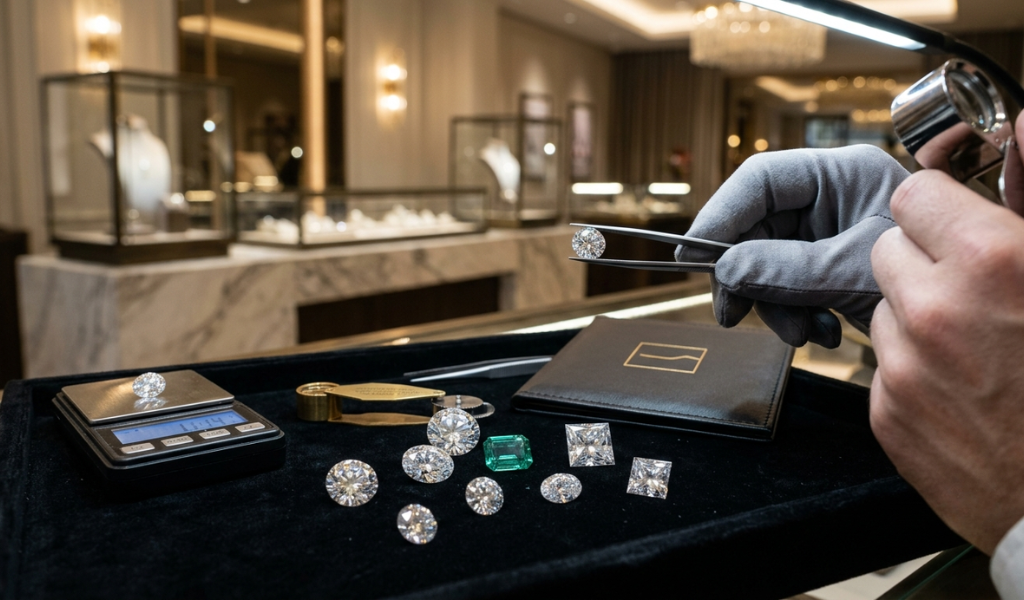
A sale event is a short, promoted window in which buyers compete for stock. Appraisals often finish sooner, and some offers arrive stronger than usual. Grading standards don't move, though. Each stone is examined under magnification, measured, and graded exactly as it would be on any other date. Preparation counts for more than timing. When the weight, grade, and origin of a stone are known, offers can be compared fairly; without them, there is little to compare against. Before the appraisal, it helps to:
  • Locate any grading report, receipt, or valuation
  • Keep the stone in a padded pouch and hold it by the edges
  • Set a minimum acceptable price in advance
  • Collect more than one offer

What Decides the Price of a Loose Diamond?

Loose Diamond Value comes down to the 4Cs. Carat is weight. Colour is the absence of tint. Clarity covers internal marks, and cut describes how well the stone is proportioned to return light.
Carat weight is an important part of diamond valuation, although its effect on price is not directly proportional. A 2-carat diamond is usually worth well over twice a 1-carat stone of equal quality, because larger stones are rarer. Colour and clarity work as a pair: a near-colourless stone with few inclusions sits far above one with visible tint or flaws. Cut shapes appearance more than most sellers expect, since a well-proportioned diamond looks brighter than a poorly cut one of the same weight.
Diamond resale price is determined separately from the original purchase price. Retail pricing includes the retailer’s margin, VAT, marketing and operating costs, while a buyer must account for the potential resale margin. As a result, offers are generally below the original retail price, regardless of the stone’s quality.

Why Do Two Diamonds of the Same Size Sell for Different Prices?

Size describes weight and diameter, not quality. Two 1-carat stones can sit at very different price points because colour, clarity and cut differ between them.
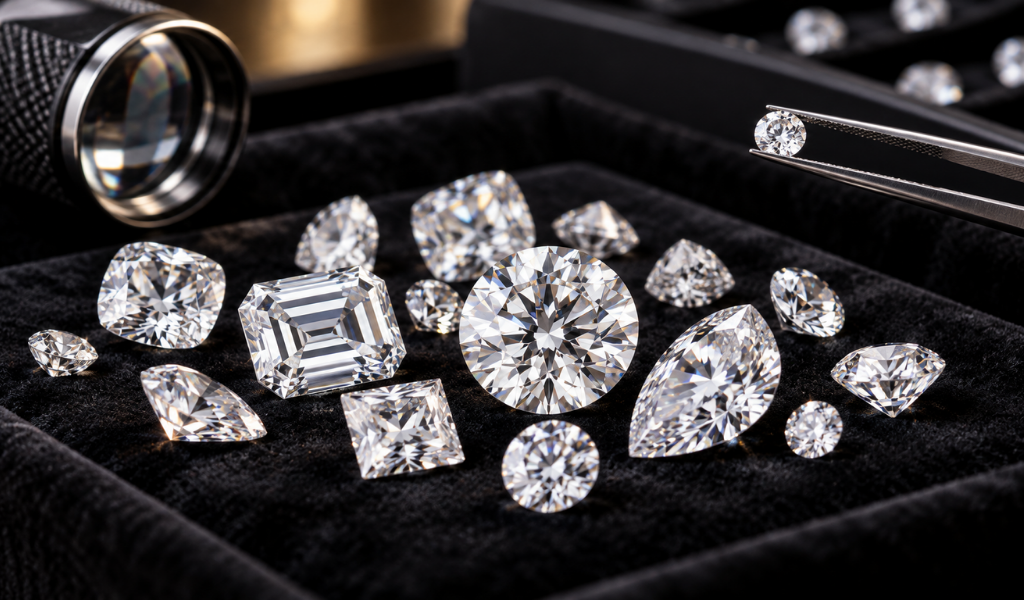
Fluorescence is another factor considered during diamond evaluation. Some diamonds glow under ultraviolet light, and strong fluorescence can leave certain stones looking slightly hazy, which may lower the offer. Polish, symmetry, chips, and abrasions are checked as well.  Diamond shape can influence both demand and resale value. Round brilliants tend to have broader demand and may resell more readily than fancy shapes, so diamonds with similar grades can still receive different offers. Carat weight alone never tells the full story.

Is a Lab-Grown Diamond Valued Differently From a Natural One?

Yes, and the gap is wide. Lab-grown diamonds share the chemical and physical structure of natural stones, but they are made in controlled conditions, and supply isn't limited in the same way. As production has grown, prices have dropped.
The diamond resale price of a lab-grown stone is therefore well below that of a natural stone of similar grade, and fewer buyers want them for resale. Reports from major laboratories state whether a stone is natural or lab-grown, so origin is always checked. Confirming it before a valuation avoids surprises in the offer.

Also Read: How To Sell Loose Diamonds In The UK Without Losing Value?
Sell Loose Diamonds in the UK

Does a Grading Report Really Change What a Diamond Is Worth?

The report doesn't alter the diamond. It alters how confidently a buyer can price it. A report from a recognised laboratory such as GIA records the 4Cs, measurements, polish, symmetry and fluorescence, so the buyer isn't relying on a visual check alone. Certified loose diamonds are quicker to verify and simpler to compare between buyers. Uncertified stones can still be sold, but buyers may leave a wider margin for doubt. Older reports stay useful, and a laser inscription on the girdle can be matched to the report number to confirm identity.

Conclusion

Anyone who wants to sell loose diamonds on Super Saturday is better placed once the pricing factors are clear. The 4Cs, origin, fluorescence and documentation all feed into the offer, and the resale figure will normally sit under the original retail price. A free valuation from an established diamond specialist shows where a stone stands before any decision is made.

FAQs on Sell Loose Diamonds

1. What affects the value of loose diamonds the most?

The 4Cs set the baseline: carat, colour, clarity and cut. Origin, fluorescence and documentation then adjust the final offer.

2. Is Super Saturday a good time to sell loose diamonds?

It can be, as busier buyers may offer more. Comparing quotes is still the most reliable way to confirm a fair price.

3. Do I need a diamond grading report to sell?

No. A report from a recognised laboratory does make the stone easier to verify and can support a better offer.

4. Are lab-grown diamonds worth less than natural diamonds?

Yes. A lab-grown stone usually resells for far less than a natural diamond of the same grade.

5. Why is the diamond resale price lower than the purchase price?

Retail prices include margin, VAT and overheads, and buyers need their own resale margin.
 

About Author

John is a jewellery blogger and industry researcher who writes about trusted jewellery buyers, diamond valuations, and the latest jewellery trends. His expert guides help readers understand the selling process, choose reputable buyers, and secure the best value for their diamonds and fine jewellery.